Showing posts with label Costa Rica. Show all posts

Friday, April 23, 2010

Costa Rica, Days 7-10- Manuel Antonio and #400

Note: Sorry this post is so late- I haven't really had time to blog the past few weeks. This is the final post about my Costa Rica trip. If you haven't read the other posts from my trip, it might make sense to go back and read them in order. At this point in my trip, my life list was at 398.

With the number of good birds that I had been seeing, I figured I could get the 2 lifers I needed for 400 without any trouble- maybe even before breakfast. However, this was around the point that new sightings started to taper off. I still saw great birds- pelicans, frigatebirds, 5 tanagers, a few Euphonias, and a pair of Chestnut-manibled Toucans, but at this point I had seen most of them already, and lifers were becoming scarce.

We went to Manuel Antonio National Park, famous for its beaches and monkeys. There there were dozens of White-faced Capuchin monkeys, and they were very tame, stealing food from beachgoers and trashbins. Rarer were the Central American Squirrel Monkeys, a small, endangered species that is found in only 2 locations in Costa Rica. We saw both.


And, of course, the beach was incredible.

In addition to the monkeys, iguanas also raided our bags-


We walked out on Punta Catedral (Cathedral Point), a rocky outcropping in the national park. From the end of the point, when I scanned the ocean, I saw Frigatebirds, Pelicans, and another type of bird with a different silhouette. I quickly realized that they were Brown Boobies, a type of seabird closely related to the Northern Gannet. Lifer, and bird #399.

The view from Punta Catedral-


On the way home from the beach, we heard a very loud call, and then a tour leader pointed out a toucan. It turned out to be a Fiery-billed Aracari, a very cool bird with a large red bill. It is endemic to Costa Rica and western Panama, and it was my 400th bird! 

That night my dad predicted that I was done for lifers on the trip, so I woke up earlyish, sat on the balcony, and found 2- Social Flycatcher and White-collared Swift. That's real extreme birding there- it takes a lot of dedication and perseverance to sit on a balcony at your hotel room, in your pajamas, with an ocean view,  and watch tanagers, hummingbirds, frigatebirds, and other lifers fly by.

We went to the beach again that day. At one point there is a small bridge over a stream. I was a little behind, because I had been looking at Inca Doves, so when I got the bridge my parents were saying something about a wading bird with pink or red legs. I tried to think of a bird like that, and drew a blank, but luckily at that point a Gray-necked Wood-Rail popped out of hiding. Lifer, and an awesome bird. 


I again used my foolproof birdfinding method of listening to hear people talking about birds, and then looking in the direction that their scope is pointed. This became especially useful when one guide started talking about a "stickbird." There are only a few birds that could accurately by called a stickbird, and the Common Potoo is one of them. It looked exactly like the top of the broken branch it was perched on. 


At the beach I saw a flyby Royal Tern and a Green Kingfisher. Though the birding had been pretty incredible, I had not seen too many raptors- White-tailed Kite on the first day, and both Caracaras, but no hawks. I was therefore very happy when, while I was watching the potoo, first a Double-toothed Kite and then a Roadside Hawk both landed nearby. Both lifers, and, being raptors, very cool.
The kite-


An odd sound coming from a thicket turned out to be a quartet of Chestnut-backed Antbirds, accopanied by a Riverside Wren. Two more lifers, the latter endemic to CR/W. Panama. Back at the hotel room, I saw what I thought was a vulture from the balcony, but then looked again and realized it was actaully a Mangrove Black-Hawk, which pretty much eliminated the raptor shortage. At the pool a dusk, I found a flock of Smooth-billed Anis and a Lesser Nighthawk. 

The next day was our last full day in Costa Rica. My dad and I went Jet-skiing, while my mom and sister went to a spa. Jetskis are obviously not ideal for birding, but I did get great looks at pelicans, frigatebirds, and a Brown Booby ~15 feet away, a much better look than the distant birds on the colony the previous day. Back at the hotel, I picked up Spot-crowned Euphonia, and we headed back to San Jose. On the way, I spotted both anis, both caracaras, a few herons, and an osprey. In the parking lot of a supermarket, I spotted a black bird and a brown birds- male and female Blue-black Grassquits, which would turn out to be my last lifer of the trip. 

Back at the Hotel Bouganvillea, I saw many of the same birds as before- Rufous-tailed Hummingbirds, Canivet's Emeralds, Rufous-capped Warblers, Inca Doves, White-eared Ground-Sparrows, and a Blue-crowned Motmot. I managed to get an identifyable shot of the ground-sparrow.


The last bird of what was an incredible trip was a Tropical Kingbird just outside the airport, before we left the tropics for frigid New York. 

Saturday, March 27, 2010

Costa Rica, Day 5- Cloud Forest to the Coast


The morning was not particularly birdy, but it was really fun- we went ziplining through the cloud forest. It was really awesome. The longest cable was a quarter mile long and 100 feet up. Afterwards, we did a tarzan swing, where you are strapped to a rope, tossed off a 30 foot platform, and then swing out. That was much scarier than the zipline. Birds seen included Black-faced Solitaire, Common Bush-Tanager, and Violet Sabrewing.


Back at the hotel, a quick birdwalk produced Blue-and-White Swallows, Yellow-faced Grassquits, a Wood Thrush, 2 White-eared Ground-Sparrows, and a pair of lifers- Gray-breasted Martin and Paltry Tyrannulet.

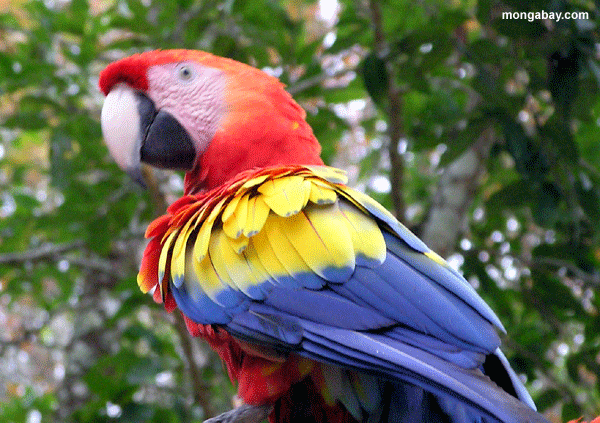
Unfortunately, then we had to leave the highlands. The upside, however, is that we were going to the beach, and that our next target were Scarlet Macaws, the ultimate parrot, and the bird most people think of when they hear "rainforest."

Looking back towards Monteverde, we had a great view of the cloud forest and the valley below it.

As we decended towards Carara National Park on the Pacific Coast of Costa Rica, we were passing through dry cattle pastures, and we saw two denizens of this habitat- Groove-billed Ani and the remarkable long-tailed, sky blue White-throated Magpie-Jay. Another very cool bird that we saw while driving by fast was a Turquoise-browed Motmot. In NY you see pigeons and starlings by the side of the highway. In Costa Rica you see Magpie-Jays and Motmots. 
We wanted to get the the Tarcoles River Bridge by dusk to see the Macaws, but we did have time for a quick stop- in the town square of Orotina, home of what has to be the most famous Black-and-White Owl in the world. 
So me, my sister, and my dad, the only Americans in the town, were walking around with binoculars and cameras looking up trees. The ice cream vendor there must be used to that kind of thing, and he approched us, saying, "Black-and-White Owl?" It turned out that was the only English he knew. 
But sure enough, he knew right where the bird was, and pointed it out. Of course, we had to buy his ice cream too. 


We arrived in Tarcoles, checked into our hotel, saw a Turquoise-browed Motmot and some more Anis,  and headed to the bridge.

Sillouette of the motmot (look at the tail!)


When we arrived, I began finding some of the common coastal birds that one might see in Florida or the SE United States- Great, Snowy, and Cattle Egrets, Little Blue, Great Blue, and Tricolored Herons, Laughing Gull, Black-necked Stilt, and Yellow-crowned Night-Heron. 

Also interesting were the dozens of gigantic crocodiles in the Tarcoles River.


A Wood Stork flew past, as did some Montezuma Oropendolas. I spotted two lifers, a Bare-throated Tiger-Heron and a Northern Jacana, the latter with yellow wing feathers and very long toes. 

Around this time, a bird flew towards us from the direction of the forest. It called once, and flew on. Originally puzzled by the bird's shape, I suddenly caught a glimpse of the color on its wings- Red, Yellow, Blue. Scarlet Macaw!! It was a brief and somewhat distance look, but still a great bird. It got darker, and it became clear that that was the only one we would see for the night. 

Still on alert for another macaw, I watched a different spectacle. When we had arrived, in broad daylight, there were huge amounts of swallows, mostly barn but with some mangrove swallow mixed in, catching insects over the river. As it got later, these birds began to move out, racing under the bridge and away towards their roosts, all in the same direction, alone or in small groups. At the same time, single Costa Rica Swifts were flying in the opposite direction under the bridge, to forage in the same spot that the swallows were before. When it grew even darker, the swifts, like the swallows had done earlier, began to move out. This time there was not as clear of a migration in, but suddenly there was a Lesser Nighthawk above me. The numbers grew until there were dozens of them, erratically chasing insects. They were the first of their family that I had seen, and they immediately became one of my favorite birds. The three groups of birds with similar food and foraging habits all used the same spot- swallows in day, swifts at dusk, and nighthawks at night, and I was there to watch their daily procession as the sun set.

Thursday, March 11, 2010

Costa Rica- Day 3- Volcano to the Cloud Forest

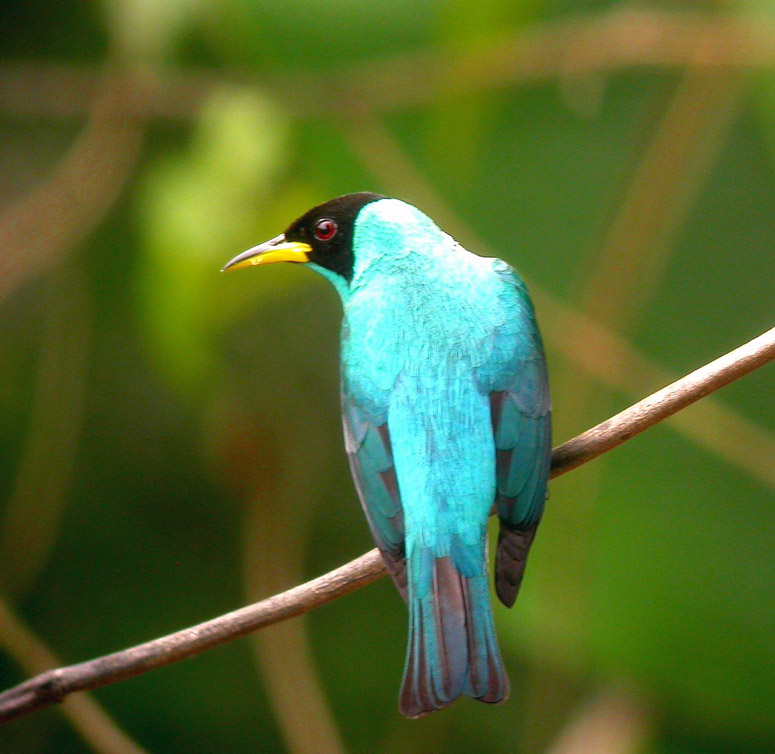
Since I was up fairly early, our hotel had a balcony, and I had seen very few "caribbean slope" birds so far, I was able to see 7 lifers before breakfast- Black-cheeked Woodpecker, Black-striped Sparrow, the tiny Bananaquit, the really cool black-and-red Passerini's Tanager, Buff-throated Saltator, Ruddy-ground Dove, and a female Green Honeycreeper (nowhere new as colorful as the male, which I didn't see, but still green- sort of like seeing a female painted bunting without the male). Not a bad list, but unfortunately it was even rainier and foggier, so I did not see my life volcano.

After breakfast we decided to go to the Silencio Reserve, a private reserve that is about as close to the volcano as it is safe to get. Notice anything unusual about this sign?:


Just in case, they have you park facing the exit. That's how close the volcano is. Notice the fog, rather than spectacular volcano view, in the background. 

Still, the birds were good. On the way there, I saw what I was fairly sure was a crow flying away. Then I realized that there are no crows in Costa Rica. Hmmmm. 

When we pulled into the parking lot, my mom solved the mystery by spotting a large black bird with a yellow tail, orange-tipped bill, and some bare facial skin. Montezuma Oropendola. I had underestimated the size of these blackbird relatives. Instead of being grackle-sized, as I was assuming, they were easily crow-sized. The bright yellow tail contrasts with the overall black plumage, especially in flight. 

In the parking lot I also found Bananaquits, an unidentified Pewee, and a lifer, Yellow-faced Grassquit. 

We drove up to the parking lot where the photo above was taken, and started to walk down a trail. There were a pair of Chestnut-manibled Toucans in one tree, and Red-lored Parrots in another. Both lifers. Toucans and Parrots!!


Then, when I looked back, the Chestnut-manibled Toucans had been replaced with a Keel-billed Toucan, with an even more brightly colored bill. The birds on this particular walk tended towards the large and impressive- Oropendola, Parrots, Two Toucans. It turned out to be a great stop, even without a volcano.

Back at the hotel, when we were checking out, I still managed to get a few more birds, one of which I would have no chance at for the rest of the trip. In the parking lot I found a Black-cheeked Woodpecker, Palm Tanager, and Black-cowled Oriole (a Caribbean slope specialty). Toucans were trash birds by now- there were 4 chestnut-manibled and one fly-by keel-billed. 

Palm Tanager camouflage:

Black-cowled Oriole:

We departed for what would be our best birding spot of the trip, the famous Monteverde Cloud Forest Biological Reserve. On the way, my mom pointed out a Crested Guan- an arboreal turkey-like (though unrelated) bird. At one point we ran into a roadblock of White-nosed Coatis (Also called Coatimundis), which apparently really like cookies. 


Of course, feeding wild animals, even cute ones like coatis, is a bad idea, but we got good looks because of it. 

By this time, we were skirting Lake Arenal, the largest lake in the country. We stopped for a couple minutes for the view at a restaurant. I stayed in the car at first, but then we switched off. I asked my mom and sister if I should bring binoculars. They said probably not. So I didn't. When I went across the street, it turned out that there were 4 Collared Aracaris (toucans) and 6-7 Gray-headed Chachalacas. I went back to the car to get my binoculars ("Sure, Mom, no need for me to bring my binoculars. It's not like anyone would want to look at toucans through them.") I got great looks at both. The Chachalacas were a lifer, and with the Creasted Guan my 2nd Cracid (Currasows, Guans, and Chachalacas) of the trip.

We stopped for lunch at the Lucky Bug cafe/art gallery/gift shop. The food was good, and the fresh fruit drinks were really good. So were the birds. Keel-billed Toucan, Black-cheeked Woodpecker, Palm Tanager, Montezuma Oropendola, Rufous-tailed Hummingbird, and two lifers, White-necked Jacobin and Yellow-throated Euphonia, were all present. 

Black-cheeked Woodpecker:


Female and Male Yellow-throated Euphonia, A curious Palm Tanager:


White-necked Jacobin


We left Lake Arenal for the dry mountain regions on the way to Monteverde. (The 2nd photo is panorama. Click on it to see the whole thing)


The road up to Monteverde is known for being one of the country's worst. It is not paved, and has enough bumps so that we were very glad to have 4-wheel drive. The road was also not very crowded, which was good, because it was not very wide. Another good thing about that was that we could stop if I saw a bird. That would be useful on two occasions. 

Because we were now in more of an open, cattle-pasture habitat, I shouldn't have been as surprised as I was when a Crested Caracara flew by. Great bird, easily one of my top 5 favorite birds. The next bird we saw was quite a bit smaller, but far more vibrant. I was looking out the window, and spotted two brilliant blue birds. They were really blue. Not like the blue-gray tanagers, which are, well, blue-gray. These birds recalled indigo buntings, but they had a decurved bill, red legs, and bright yellow underwings. Red-legged Honeycreepers. Awesome. And unlike the Green Honeycreeper earlier, both were males. 


See the yellow underwing on the left-hand bird in the last photo?

We drove higher, entered the cloud forest, finally reached a paved road, got to the town of Santa Elena, and found our hotel, the Arco Iris, which was really nice. A little birding around the hotel grounds got me 2 lifers- Blue-and-White Swallow and Wilson's Warbler, plus another spectacular Blue-crowned Motmot.


Good Birding!


Thursday, March 4, 2010

Costa Rica, Day 1- Intro to Tropical Birding

We arrived in Costa Rica around 11:30. There is nothing too interesting to report about the flight, but I saw the first bird of the trip as we descended toward San Jose- a Black Vulture. By the time we had gotten our rental car, gotten lost, and finally gotten to our hotel, I had seen 3 lifers- Great-tailed Grackle, Red-billed Pigeon, and Rufous-collared Sparrow (below).

Our hotel was called the Hotel Bouganvillea, and its extensive gardens provided good birding and the perfect place to learn some of the more common tropical species. I found a Clay-colored Robin, the most abundant species for the whole trip, and an Inca Dove in the parking lot of the hotel. 2 more lifers. For the rest of the day I swam in the pool and birded the hotel grounds (below)
 Some of the better birds included a fly-over flock of Crimson-fronted Parakeets, the first endemic of the trip (it is only found in Costa Rica and western Panama), great looks at a White-tailed Kite, Rufous-tailed Hummingbirds, which would be trash birds if they weren't hummingbirds, a Rufous-capped Warbler, Blue-gray Tanager, Grayish Saltator, and Hoffman's Woodpecker(below), the 2nd endemic of the trip (Found only in Nicaragua and Costa Rica).
The birding also interesting because, even in such a tropical setting with parakeets and motmots, there were some birds that were the same as those that will be up in New York in just 2 months- Yellow Warbler, Baltimore Oriole, Philidephia Vireo, and Tennessee Warbler. This Baltimore Oriole, leaving its tropical wintering grounds, could end up in Central Park, Magee Marsh, Mount Auburn Cemetery, or any other patch of forest in the eastern U.S:
The birding was really easy- no bitter cold, not oppressive heat, no tall trees or dense brush, so I continued to rack up birds. Tropical Kingbird. Brown Jay. Great Kiskadee. Summer Tanager. What might have been the best bird of the day was a White-eared Ground-Sparrow, a somewhat secreative bird which, along with a similar but rarer relative, the Prevost's Ground-Sparrow, was a specialty bird of the hotel gardens. I tried, but could not find the other ground sparrow. 

I ran into a British woman who was also a birder and also hoping to see ground-sparrows, but who had not seen White-eared either. While I was trying to re-find the spot where I had seen it before, ("I think it was this path. Wait, no, this is a dead end. It has to be here somewhere, the gardens aren't that big...") she pointed out a green-blue bird that had just flow by when I was looking the other way. It was a Blue-crowned Motmot, a large (bigger than a jay) blue-green bird with a long, racquet-tipped tail and a brilliant iridescent sky-blue crown. My photos don't do it justice (or even close), but it was awesome. 


(They actually might be better if you click on them to see the large image. The flash made the eyes weird though.)
After dinner, 3 minutes of listening for owls and nightjars came to nothing because by then it was raining, but that did not make the day any less of a success. In 3-4 hours of walking through the hotel gardens, I had seen 28 species, 20 of which were life birds. I was now 6 away from 300. 

Monday, March 1, 2010

Some Costa Rican Hummingbirds

I won't be able to do an actual report today, but here are two shots from the famous Hummingbird Gallery at Monteverde Cloud Forest Reserve. We saw 8 species in 5-10 minutes, but the most amazing part was how close they were. I took both of these shots from less than 2 feet away using the close-up mode on my camera. More photos and the trip report will come soonish maybe.

Violet Sabrewing- Huge and stunning- the king of Costa Rican Hummingbirds

Green Violetear- One of the cooler hummingbirds, and the most cooperative. Also a Bananaquit, not a hummingbird but a nectar-drinking tanager 

Saturday, February 27, 2010

I'm back...

...And it was awesome. 141 lifers, 13+ hummingbird species, 5 toucan species, 3 monkey species, Resplendent Quetzal, Scarlet Macaw, Common Potoo, Golden-browed Chlorophonia, and a lot more. Photos and reports will begin to go up soon.

Wednesday, February 17, 2010

I leave Tomorrow!

My plane for Costa Rica leaves tomorrow morning. As you can probably tell/guess, I'm pretty happy. Why? Here's one reason (out of ~850):
This excellent photo of a Long-tailed Silky-Flycatcher, a tropical relative of the waxwings,  is from http://ontfin.com/Word/wp-content/uploads/2008/04/long_tailed_silky_flycatcher.jpg

Saturday, November 28, 2009

Looking Foward to Costa Rica


This February, I am going with my family for ~10 days to Costa Rica. As many birders know, Costa Rica is a birding paradise. And though, unfortunately, the primary focus of the trip is not birding, I have been able to work a few stops into the itinerary and am hoping for some great birds. Some stops at Savegre Mountain Lodge, Carara NP, and Monteverde Cloud Forest should get me good numbers and great sightings.

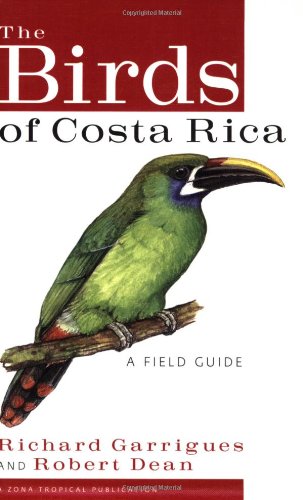
To assist in id'ing the many (850+) bird species that live in costa rica, I purchased the field guide shown above, and have been reading it almost constantly since I got it.

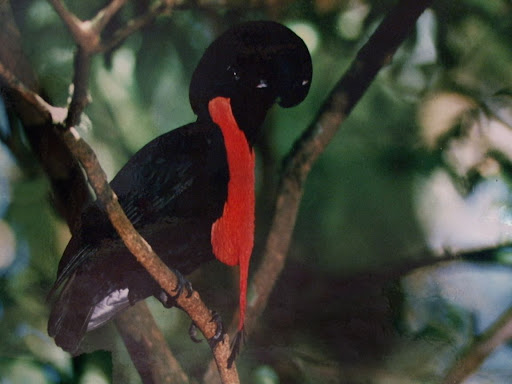
The birds of costa rica include dazzling tanagers (speckled, emerald, red-legged and green honeycreepers), awesome hummingbirds (violet sabrewing, black-crested coquette, fiery-throated hummingbird), bizzare or unique species (sunbittern, three-wattled bellbird, bare-necked umbrellabird) and some of the most beautiful birds in the world (lovely cotinga, quetzal, scarlet macaw), as well as the usual tropical contingent of manakins, parrots, motmots, euphonias, and toucans.

Jealous Yet?