If you scroll down and read my post Anatomy of a Chase, and replace "Connecticut's first Lapwing" with "Pennsylvania's first Anna's Hummingbird," "missed it by 5 minutes" with "missed it by 15 minutes," and cross out any mention of consolation birds, you have today's birding almost exactly. No need for me to write another painful post.
*side note- dipping, for those of you who may not know, is birder slang for looking for a previously reported rare bird ("twitching") and not finding it. It is not usually very fun.
Showing posts with label Rarities. Show all posts
Showing posts with label Rarities. Show all posts
Sunday, January 2, 2011

Saturday, December 4, 2010
More Rare Birds- Varied Thrush in Central Park
Today Benjamin Van Doren and I decided to chase the Varied Thrush that was found earlier this week in Central Park. It had been hanging around the area in the ramble known as "maintenance meadow," so we headed there after arriving in the park. The first bird we saw at the spot, however, was a young Cooper's Hawk, which was keeping the thrush in hiding. After a bit of searching in the thicket were it had been last seen, I happened to glance across the road and saw a distant bird high in a tree. Figuring it was a robin, I raised my binoculars, and was surprised to realize that it was the Varied Thrush! It then flew down and closer, foraging in its usual spot for a few minutes before disappearing again.
Next we wandered (or rambled, I guess) around the ramble, seeing a Fox Sparrow along with the usual suspects. There was a Bufflehead on Turtle Pond, but despite the good winds it was too late in the season for us to see any hawks. A stop back at the thrush spot yielded no more views, so we went to the Boathouse, where a Yellow-breasted Chat had been seen yesterday. No one had seen it yet today, so we were happy to find that it was still there, and it gave very good looks, especially for a normally skulking bird. The chat, belying its reputation, then flew into a dumpster, before joining a flock of House Sparrows foraging on the sidewalk right next to the entrance to the boathouse. So much for secretive and hard-to-see.
I got 2 lifers, the chat and the thrush, and extended my streak of both lifers and rarities to 3 weekends. Now about that Hermit Warbler...
Next we wandered (or rambled, I guess) around the ramble, seeing a Fox Sparrow along with the usual suspects. There was a Bufflehead on Turtle Pond, but despite the good winds it was too late in the season for us to see any hawks. A stop back at the thrush spot yielded no more views, so we went to the Boathouse, where a Yellow-breasted Chat had been seen yesterday. No one had seen it yet today, so we were happy to find that it was still there, and it gave very good looks, especially for a normally skulking bird. The chat, belying its reputation, then flew into a dumpster, before joining a flock of House Sparrows foraging on the sidewalk right next to the entrance to the boathouse. So much for secretive and hard-to-see.
I got 2 lifers, the chat and the thrush, and extended my streak of both lifers and rarities to 3 weekends. Now about that Hermit Warbler...
Monday, November 29, 2010
The Anatomy of a Chase (or, Dipping on a Lapwing)
A 10-step summary of a typical "twitch," from the perspective of my failed attempt at the Northern Lapwing in Connecticut on Sunday. A sort of how-to guide on missing incredible rarities.
Step 1- Learn about where the bird is. This is generally done through a local Rare Bird Alert or state birding listserv. Example: "Wow, Lapwing in Connecticut! Awesome."
Step 2- Find out where the bird is. Google maps is your best friend in this step. Example: Doing a google search on Storrs, CT shows that it is nowhere near anything. That is a setback.
Step 3- Scheme. If you own a car and have a lot of free time, this step is unnecessary, but for young birders like myself, it is critical. Where will you be nearest to the bird? Would your parents be willing to make a detour? What is there that is close to where the bird is? Think shopping centers, museums, whatever. Example: "We have to drive back on Route 84 anyway, and the lapwing is just 24 minutes out of the way..."
Step 4- Hype up the bird. A lot. If it's an empid, good luck. Example: "It's a really rare plover from Ireland. Striking plumage. Very cool. And its the first one ever seen in Connecticut"
Step 5- Overcome the vast number of obstacles in your path. Examples: The thanksgiving traffic on the Mass Pike, the impending darkness, and the UCONN basketball game.
Step 6- Arrive at the rarity location, after getting lost a few times. There are now three options. Either the bird is there (go to Step 7), it's temporarily out of sight (go to Step 8), or just flew halfway across the continent five minutes before you arrived (go to Step 9)
Step 7- Rejoice, brag, and add the bird to your life list. Blog about how awesome it was, and how great it was to have seen it.
Step 8- Desperately search for the bird and pray your trip will not prove to be futile. Depending on the outcome, go to step 7 or 10.
Step 9- "Oh, you just missed it. Yeah, it flew that way, and kept going. It's probably back in Ireland by now. Nope, absolutely no chance it's coming back." Go to step 10.
Step 10- Despair. Having now wasted a fair amount of time for a great bird that you are not going to see, the Barnacle and White-fronted Geese nearby are small consolation. Yes, the Barnacle Goose is a Code 4 bird too, and the White-front is a lifer, but neither of them are lapwings. Go home, and instead of posting photos of lapwings on your blog, bore your readers to death with a long-winded tale of your failed search.
Can you guess what route I took? And seriously, the geese were good to see. That's not to say they make up for missing the lapwing, but it was not as bad as I portrayed it above. I'll have another chance to see a Lapwing in North America. Maybe. If I move to Newfoundland.
Step 1- Learn about where the bird is. This is generally done through a local Rare Bird Alert or state birding listserv. Example: "Wow, Lapwing in Connecticut! Awesome."
Step 2- Find out where the bird is. Google maps is your best friend in this step. Example: Doing a google search on Storrs, CT shows that it is nowhere near anything. That is a setback.
Step 3- Scheme. If you own a car and have a lot of free time, this step is unnecessary, but for young birders like myself, it is critical. Where will you be nearest to the bird? Would your parents be willing to make a detour? What is there that is close to where the bird is? Think shopping centers, museums, whatever. Example: "We have to drive back on Route 84 anyway, and the lapwing is just 24 minutes out of the way..."
Step 4- Hype up the bird. A lot. If it's an empid, good luck. Example: "It's a really rare plover from Ireland. Striking plumage. Very cool. And its the first one ever seen in Connecticut"
Step 5- Overcome the vast number of obstacles in your path. Examples: The thanksgiving traffic on the Mass Pike, the impending darkness, and the UCONN basketball game.
Step 6- Arrive at the rarity location, after getting lost a few times. There are now three options. Either the bird is there (go to Step 7), it's temporarily out of sight (go to Step 8), or just flew halfway across the continent five minutes before you arrived (go to Step 9)
Step 7- Rejoice, brag, and add the bird to your life list. Blog about how awesome it was, and how great it was to have seen it.
Step 8- Desperately search for the bird and pray your trip will not prove to be futile. Depending on the outcome, go to step 7 or 10.
Step 9- "Oh, you just missed it. Yeah, it flew that way, and kept going. It's probably back in Ireland by now. Nope, absolutely no chance it's coming back." Go to step 10.
Step 10- Despair. Having now wasted a fair amount of time for a great bird that you are not going to see, the Barnacle and White-fronted Geese nearby are small consolation. Yes, the Barnacle Goose is a Code 4 bird too, and the White-front is a lifer, but neither of them are lapwings. Go home, and instead of posting photos of lapwings on your blog, bore your readers to death with a long-winded tale of your failed search.
Can you guess what route I took? And seriously, the geese were good to see. That's not to say they make up for missing the lapwing, but it was not as bad as I portrayed it above. I'll have another chance to see a Lapwing in North America. Maybe. If I move to Newfoundland.
Monday, November 22, 2010
Excellent Birds with the Connecticut Young Birders' Club
Where can you see a South American Fork-tailed Flycatcher, a Mexican Cave Swallow, and Canadian Common Eiders and Lapland Longspurs, all on the same day? Why, Connecticut, of course!
The first field trip of the recently created CT Young Birders' Club was on Sunday, to Hammonasset State Park in Madison, with possibly a few other stops thrown in, time permitting.
Our first stop was the parking lot of Hammonasset, which held a large flock of Horned Larks (including some with very white eyebrows- lark subspecies id, anyone?), a slightly smaller flock of Snow Buntings, and 2 Lapland Longspurs, all birds that are easy to see at Hammo, but, especially in the case of the Longspur, tricky to see at most places. The yellow-and-black faces and odd running gait of the larks, the huge white wing patches of the buntings, and the bold striped pattern of the longspurs make this trifecta fun to watch.
At the water, we scoped out many Common and Red-throated Loons, a Surf Scoter, two White-winged Scoters, 8 Common Eiders. Shorebirds were common on the rocks and jetties, with one Purple Sandpiper along with the more common Dunlin, Sanderlings, Black-bellied Plover, and Ruddy Turnstones.
Land birds in the thickets and brush were somewhat scarce, but included Yellow-rumped Warbler, American Tree Sparrow, and Hermit Thrush.
Leaving Hammonasset, we headed to a Sewage Treatment Plant (sewage = good birds) in New Haven, at East Shore Park. There are more insects there than anywhere else at this time of year (the warmth from the plant, I think), and as a result there are often late warblers and swallows, insectivores that would not usually be around this late in the year.
Our targets were Cave Swallows, a bird that breeds in Texas, Arizona, and Mexico, and winters in Central America. That is, most winter in Central America. Some end up on the east coast, where they find food at places like East Shore Park. And sure enough, there were two Cave Swallows swirling overhead not long after we arrived- a life bird for me. There were also a lot of warblers around for the time of year. In addition to the expected Yellow-rumped, there were an American Redstart, Blackpoll Warbler, and 2 Pine Warblers. Others had seen Blue-headed Vireo, Blue-gray Gnatcatcher, and a couple more warblers earlier in the day.
Everyone would have been satisfied with the Cave Swallows and the other good birds, but we made one last stop on the way back to Greenwich- Cove Island Park, new home of the Fork-tailed Flycatcher, a South American bird 3000 miles from where it should be.
I had seen the forktail Saturday, but it was nice to see it again, and I actually got better looks this time. An excellent bird, and a great way to end an extremely successful first field trip.
I didn't really take many photos,(Alex Burdo and Benjamin Van Doren did though- check out their blogs here and here)but here is a very bad photo of both of the Cave Swallows overhead:

I'm weighing whether that can even be considered a record shot - if I hadn't labeled it, would you be able to id the birds? I'm not a photographer, and the good bird, awful photo tradeoff is fine with me.
The first field trip of the recently created CT Young Birders' Club was on Sunday, to Hammonasset State Park in Madison, with possibly a few other stops thrown in, time permitting.
Our first stop was the parking lot of Hammonasset, which held a large flock of Horned Larks (including some with very white eyebrows- lark subspecies id, anyone?), a slightly smaller flock of Snow Buntings, and 2 Lapland Longspurs, all birds that are easy to see at Hammo, but, especially in the case of the Longspur, tricky to see at most places. The yellow-and-black faces and odd running gait of the larks, the huge white wing patches of the buntings, and the bold striped pattern of the longspurs make this trifecta fun to watch.
At the water, we scoped out many Common and Red-throated Loons, a Surf Scoter, two White-winged Scoters, 8 Common Eiders. Shorebirds were common on the rocks and jetties, with one Purple Sandpiper along with the more common Dunlin, Sanderlings, Black-bellied Plover, and Ruddy Turnstones.
Land birds in the thickets and brush were somewhat scarce, but included Yellow-rumped Warbler, American Tree Sparrow, and Hermit Thrush.
Leaving Hammonasset, we headed to a Sewage Treatment Plant (sewage = good birds) in New Haven, at East Shore Park. There are more insects there than anywhere else at this time of year (the warmth from the plant, I think), and as a result there are often late warblers and swallows, insectivores that would not usually be around this late in the year.
Our targets were Cave Swallows, a bird that breeds in Texas, Arizona, and Mexico, and winters in Central America. That is, most winter in Central America. Some end up on the east coast, where they find food at places like East Shore Park. And sure enough, there were two Cave Swallows swirling overhead not long after we arrived- a life bird for me. There were also a lot of warblers around for the time of year. In addition to the expected Yellow-rumped, there were an American Redstart, Blackpoll Warbler, and 2 Pine Warblers. Others had seen Blue-headed Vireo, Blue-gray Gnatcatcher, and a couple more warblers earlier in the day.
Everyone would have been satisfied with the Cave Swallows and the other good birds, but we made one last stop on the way back to Greenwich- Cove Island Park, new home of the Fork-tailed Flycatcher, a South American bird 3000 miles from where it should be.
I had seen the forktail Saturday, but it was nice to see it again, and I actually got better looks this time. An excellent bird, and a great way to end an extremely successful first field trip.
I didn't really take many photos,(Alex Burdo and Benjamin Van Doren did though- check out their blogs here and here)but here is a very bad photo of both of the Cave Swallows overhead:

Saturday, November 20, 2010
Fork-tailed Flycatcher
A usually South American Fork-tailed Flycatcher was found a couple of days ago at Cove Island Park in Stamford, just a half hour from my house. I was hopeful it would stay around until the weekend, and it did, so I went today to see it. A great bird. I got very good looks at it. Photos were less good. Two digiscoped shots-


Thursday, October 28, 2010
Prothonotary Warbler in Manhattan!
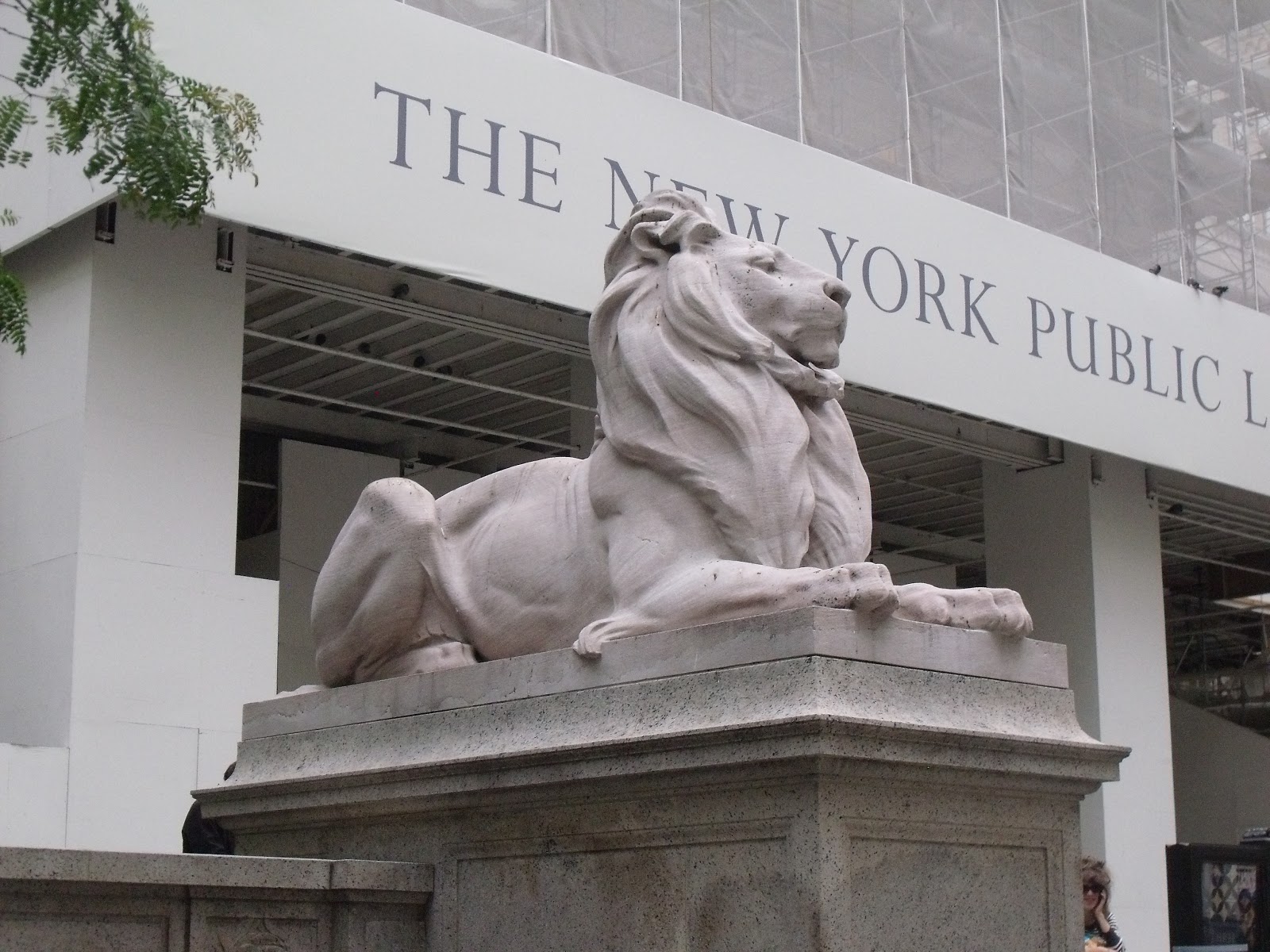
About a week ago, a NYC birder found a brilliant and rare Prothonotary Warbler in a very improbable location- the front of the New York Public Library, in the middle of Manhattan. The bird was eating with the usual White-throated and House Sparrows, and Pigeons, but its bright golden hue made it very clear that it did not belong there. Most Prothonatory Warblers are in Florida or Central America now, far from the streets of New York City.
On Sunday, my family and I were already in the city to see a play, so I convinced my parents to stop quickly at the library. Within 10 minutes, I found the bird, and watched it briefly before it flew off.
The photos did not come out great, but a very fun bird to watch.


On Sunday, my family and I were already in the city to see a play, so I convinced my parents to stop quickly at the library. Within 10 minutes, I found the bird, and watched it briefly before it flew off.
The photos did not come out great, but a very fun bird to watch.


For context, the bird was just to the left of the lion:
Good Birding!
Thursday, September 9, 2010
Mini-Warblerfest at Marshlands

I had a very good morning of birding at Marshlands this morning, with 11 warblers, a Kestrel, and other migrants, such as Red-eyed Vireo, Baltimore Oriole, Veery, and Blue-Gray Gnatcatcher all making appearences. The undisputed highlight was an adult male GOLDEN-WINGED WARBLER (!!) that popped out of a thicket for a few seconds of great looks, a few hours of joyful birding, and what will presumably be a few weeks of bragging about it. It was apparently the first fall record for Marshlands, a life bird for me, and immediately became one of my favorite warblers, behind the "tricolored triumverate" (it was the best I could think of on the spot) of Blackburnian, Prothonotary, and Cerulean.
Warblers were:
Magnolia Warbler- 5-8
Chestnut-sided Warbler- 2
Black-and-White Warbler- 6
American Redstart- 12-15
Golden-winged Warbler- 1
Tennesssee Warbler- 1
Northern Parula- 4
Ovenbird- 4
Northern Waterthrush- 1
Canada Warbler- 3
Common Yellowthroat- 10-15
Happy Migration!
Monday, August 30, 2010
Good Birding at Jamaica Bay
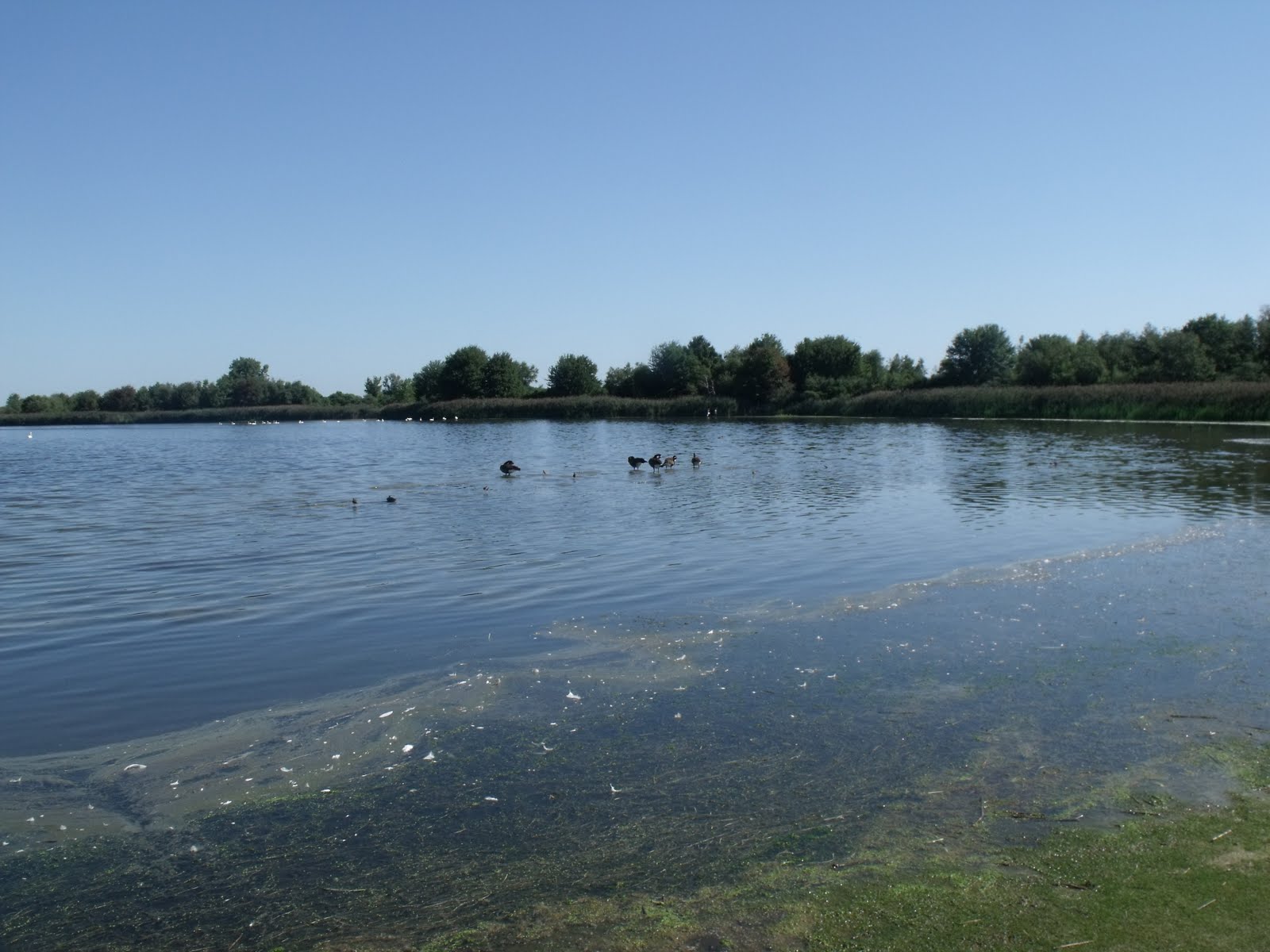
On Saturday I headed to Jamaica Bay Wildlife Refuge in Queens, an excellent birding spot, particularly for shorebirds, which were my main target. The plan was to walk to trail by Big John's Pond first, then head to the North End of the East Pond for shorebirds on the mudflats at high tide.
Walking out to the East Pond revealed that warbler migration is getting pretty good, as I saw 7 warbler species. Redstarts were everywhere, sometimes accompanied by yellowthroats or magnolia warblers. Yellow warblers were present at Big John's Pond, as was a Black-and-White Warbler. One Black-and-White landed on a branch just three feet above my head. At around the same time, I looked ahead at the trail just in time to see an Ovenbird and a Northern Waterthrush walk past each other- the ovenbird going right, the waterthrush, bobbing, going left.
I also found a "life butterfly"- a White Admiral

There were a lot of birds at the end of the trail on the East Pond, but they were mostly waterfowl (including Gadwall and Blue-winged Teal) and gulls, with a few cormorants and a kingfisher mixed in- no shorebirds. Looking north, I could see that all of the mudflats were covered, and the North end was flooded. So much for the plan.
On the way back to the car, though, I had a stroke of good luck. An empid with a large eye-ring appeared, and turned out to be a lifer, if a long overdue one- a Least Flycatcher. Good looks at a Great-crested Flycatcher, plus kingbird and phoebe, quickly brought the flycatcher total to four.
Instead of going to the North end as I had planned, I decided to go to the South End, which was apparently not as flooded, though the water level was still high.
The thing about the East Pond that makes it so good for shorebirds is that it is muddy. Very muddy. The mud at the East Pond has been elevated to almost mythical status in the birding world (most recently by Corey Finger in his excellent "Ode to Mud" on 10000birds.) Therefore, I guess I should post a few mud photos, with a warning to those who haven't birded there that it should not be attempted without boots, or bad things could happen. (Of course, boots don't help if you sink up to your waist, which, according to legend, has actually happened before)


Walking out to the East Pond revealed that warbler migration is getting pretty good, as I saw 7 warbler species. Redstarts were everywhere, sometimes accompanied by yellowthroats or magnolia warblers. Yellow warblers were present at Big John's Pond, as was a Black-and-White Warbler. One Black-and-White landed on a branch just three feet above my head. At around the same time, I looked ahead at the trail just in time to see an Ovenbird and a Northern Waterthrush walk past each other- the ovenbird going right, the waterthrush, bobbing, going left.
I also found a "life butterfly"- a White Admiral

There were a lot of birds at the end of the trail on the East Pond, but they were mostly waterfowl (including Gadwall and Blue-winged Teal) and gulls, with a few cormorants and a kingfisher mixed in- no shorebirds. Looking north, I could see that all of the mudflats were covered, and the North end was flooded. So much for the plan.
On the way back to the car, though, I had a stroke of good luck. An empid with a large eye-ring appeared, and turned out to be a lifer, if a long overdue one- a Least Flycatcher. Good looks at a Great-crested Flycatcher, plus kingbird and phoebe, quickly brought the flycatcher total to four.
Instead of going to the North end as I had planned, I decided to go to the South End, which was apparently not as flooded, though the water level was still high.
The thing about the East Pond that makes it so good for shorebirds is that it is muddy. Very muddy. The mud at the East Pond has been elevated to almost mythical status in the birding world (most recently by Corey Finger in his excellent "Ode to Mud" on 10000birds.) Therefore, I guess I should post a few mud photos, with a warning to those who haven't birded there that it should not be attempted without boots, or bad things could happen. (Of course, boots don't help if you sink up to your waist, which, according to legend, has actually happened before)


Overall, shorebird numbers were quite low, but there was decent, if not great, variety. Both yellowlegs were present, as were Short-billed Dowitchers, White-rumped, Least, and Semipalmated Sandpipers, a couple cool Stilt Sandpipers, and a single Semipalmated Plover.
The South End (note high water level)-
The two most common peeps- Least and Semipalmated

Least-

Stilt Sandpiper-

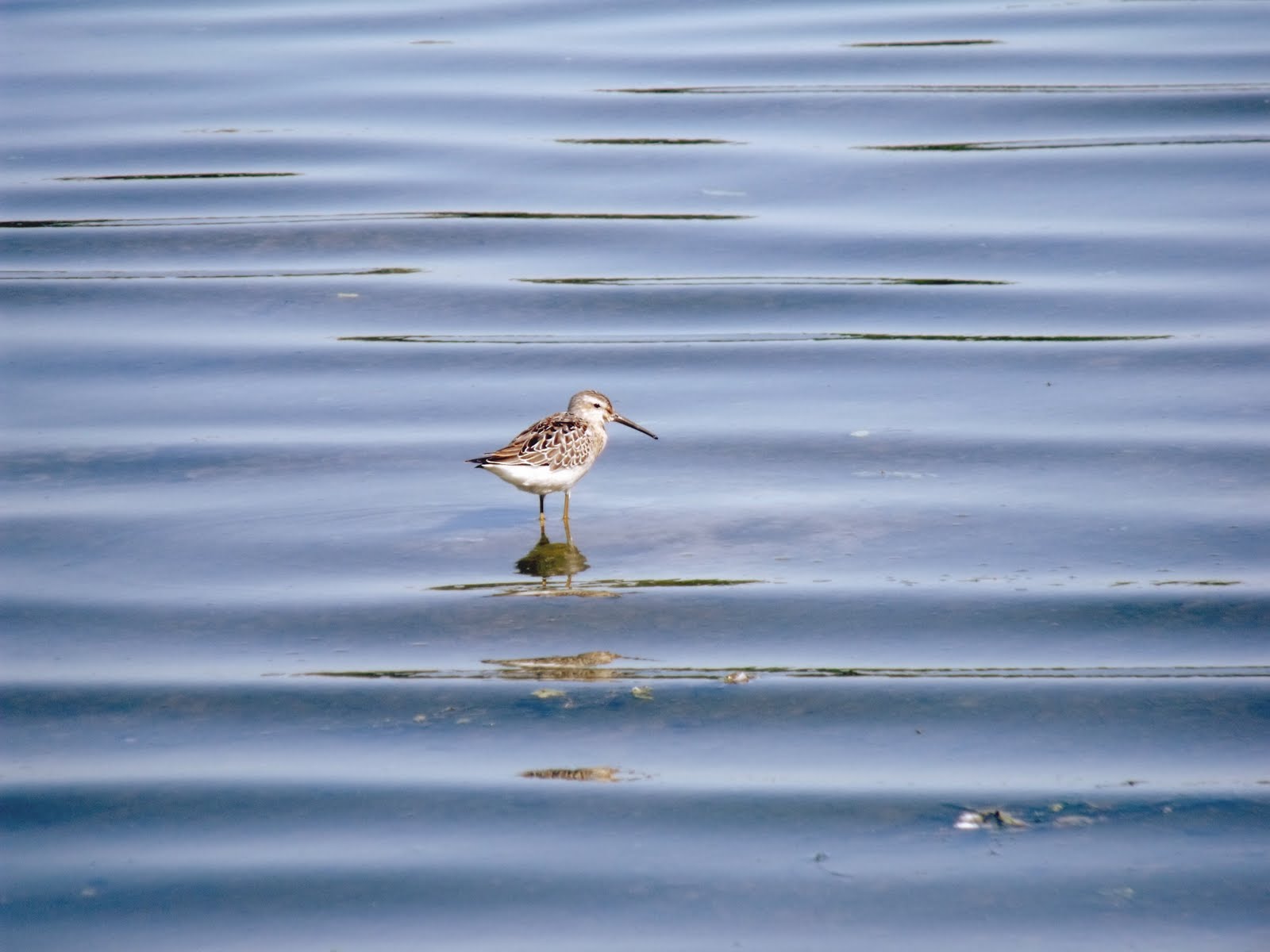
Lesser (I think) Yellowlegs-

Mute Swan-

I walked along the eastern edge of the pond to the raunt, a group of posts and pilings that apparently used to be a railway station and community, and is now a good landmark and birding spot on the pond. I found more of the same shorebirds there, plus some Northern Shovelers.
The best bird of the trip were two brownish, long-winged shorebirds in a flock of peeps. If you've been reading this blog, you already know that they were Baird's Sandpipers, not a common bird in New York, and a lifer for me. Since I've posted lots of the photos I took of them, I just put up one more to end this post. The others are in the previous two posts.
Baird's Sandpiper-

Sunday, August 29, 2010
More Baird's Photos
I overlooked these two photos yesterday, but they might actually be clearer shots of the Baird's (Which were apparently relocated today)
 (right)


(top left and maybe center-facing right)
Saturday, August 28, 2010
Baird's Sandpiper at Jamaica Bay
I found a pair of Baird's Sandpipers at Jamaica Bay this morning. This photos aren't very good, but they are enough (I believe) to identify the birds. A full report of the trip will be up at some point.


(center)
Good Birding!

(center)

(second from bottom left and flying)

(back right)

(center)
Good Birding!
Wednesday, July 21, 2010
One Good Tern...


(Arctic Terns, Plymouth Beach, MA, 7/8)
... Deserves another. However, in this case, there was not just one other good tern, but 4. On a trip to Cupsogue, a great birding location on Long Island, I saw Gull-billed, Roseate, Sandwich, and Royal Terns. A lengthy trip report will be posted as soon as I write it, which might, unfortunately, be a while.
Monday, June 14, 2010
Memorial Day Sedge Wren
Sorry I haven't posted in a while- I've had finals, and been away for the past 3 weekends. The first of those three, Memorial Day, I went to my beach house in Massachusetts. I was lucky, and there had been a Sedge Wren, rare in MA and difficult to see anywhere, at the local wildlife sanctuary, Daniel Webster Audubon.
So as soon as we arrived, I went to the sanctuary to see if I could find it. There were Bobolinks and Purple Martins everywhere- Daniel Webster is primarily a grassland (good for bobolinks) and there is a large martin colony there. A Willow Flycatcher, Great Egret, and Osprey were also notable.
I made my way to the Fox Hill observation platform, where the wren had been seen. There were two people there. Thee wren had not been seen or heard in 30 minutes, they said. After 15 minutes of waiting and listening, the wren sang, then flew directly towards us, landing in a clump of grass, then perching near the top to sing- great looks. It dove back into the grass, and emerged a ways to the right, and slightly closer. It moved around a bit more, then flew even closer, giving great looks from 10-15 feet away, before sinking into the brush again, and falling silent. Great looks at a life bird, and one the is apparently not prone to giving great looks, ever.
No shots of the Sedge Wren, but some miscellaneous photos from the short trip:
Flicker-


So as soon as we arrived, I went to the sanctuary to see if I could find it. There were Bobolinks and Purple Martins everywhere- Daniel Webster is primarily a grassland (good for bobolinks) and there is a large martin colony there. A Willow Flycatcher, Great Egret, and Osprey were also notable.
I made my way to the Fox Hill observation platform, where the wren had been seen. There were two people there. Thee wren had not been seen or heard in 30 minutes, they said. After 15 minutes of waiting and listening, the wren sang, then flew directly towards us, landing in a clump of grass, then perching near the top to sing- great looks. It dove back into the grass, and emerged a ways to the right, and slightly closer. It moved around a bit more, then flew even closer, giving great looks from 10-15 feet away, before sinking into the brush again, and falling silent. Great looks at a life bird, and one the is apparently not prone to giving great looks, ever.
No shots of the Sedge Wren, but some miscellaneous photos from the short trip:
Flicker-

Bobolink-

Bobolink Paradise (I know there is one in this photo, but I can't find it. Can you?)-

And finally, a difficult (I think) if not impossible quiz. I think the bloggers at 10000birds have the "diabolical quiz" thing trademarked, but this is one. Post your guess as a comment-

Good Birding!
Subscribe to:
Posts (Atom)