Showing posts with label Marshlands. Show all posts

Thursday, September 9, 2010

Mini-Warblerfest at Marshlands


I had a very good morning of birding at Marshlands this morning, with 11 warblers, a Kestrel, and other migrants, such as Red-eyed Vireo, Baltimore Oriole, Veery, and Blue-Gray Gnatcatcher all making appearences. The undisputed highlight was an adult male GOLDEN-WINGED WARBLER (!!) that popped out of a thicket for a few seconds of great looks, a few hours of joyful birding, and what will presumably be a few weeks of bragging about it. It was apparently the first fall record for Marshlands, a life bird for me, and immediately became one of my favorite warblers,  behind the "tricolored triumverate" (it was the best I could think of on the spot) of Blackburnian, Prothonotary, and Cerulean. 

Warblers were:

Magnolia Warbler- 5-8
Chestnut-sided Warbler- 2
Black-and-White Warbler- 6
American Redstart- 12-15
Golden-winged Warbler- 1
Tennesssee Warbler- 1
Northern Parula- 4
Ovenbird- 4
Northern Waterthrush- 1
Canada Warbler- 3
Common Yellowthroat- 10-15

Happy Migration!

Wednesday, June 30, 2010

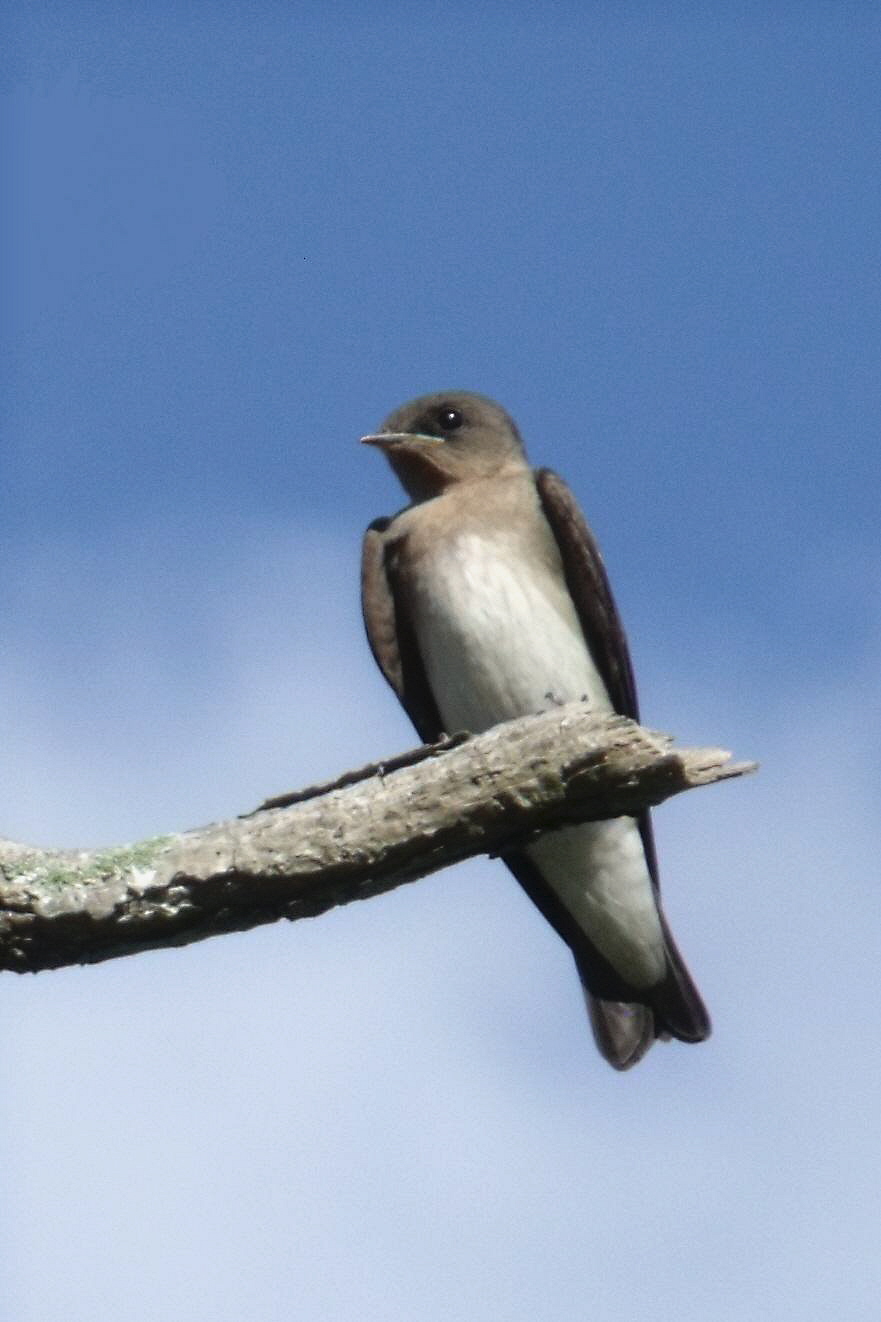
Young Northern Rough-Winged Swallows

There were quite a few of these juvenile swallows perched on snags over the marsh at the marshlands conservancy last week:


Monday, June 29, 2009

A Sufficiently Awesome Weekend- Part 1- Marsh Hen Tide

(From 10000 birds- a great birding site/blog)


I have gone birding 3 times in the past three days, and was going to post them all in one post, by now am breaking it up into 3 parts.

Part I- Marsh Hen Tide

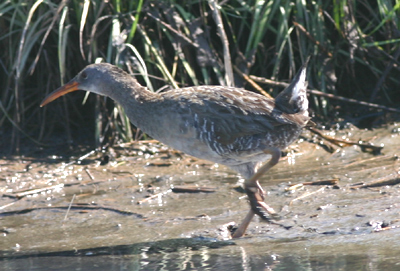
On Friday I headed over to the marshlands conservancy. It had rained so much over the past few days, plus it was a new moon 3 days before, so the tide was very high. That was exactly why I was there. I had sort of seen clapper rail before. (See my post, Ruffing It) But that had been a calling bird, and then I had seen a moving shape that could have been anything. It was not the kind of look I wanted for a lifer, but I counted it anyway. I don't know why, and I probably shouldn't have. This time I wanted a good look. So I went at a very high tide, hoping for the phenomenon known as a "marsh hen tide," when the highest tides of the year would drive the rails out of the center of the marsh and make them visable for once.

It worked. After checking out some other spots and getting indigo bunting, yellowthroat, willet, common tern, and marsh wren, I headed to the rail spot. I sat on a bench overlooking the marsh, and began scanning. Egret, Mallard, Egret. Then, by a clump of higher reeds, a head popped up, with a long bill and red eye. I had my rail. I then slunk across the marsh, but because the tide was so high, it was visable the whole time. Then it got to a spot with more water, and swam out of sight. Very, very cool bird. Looking back to where the first rail had been spotted, I saw another one poke its head up, then disappear. No marsh sparrows, but after seeing the rails, I can't complain. Plus, there will be another time for marsh sparrows (foreshadowing alert!- see later posts in this series)

Good Birding,

Corbett


Saturday, June 13, 2009

Marshlands Marsh Wrens and More

(From sdakotabirds.com. Great site with good photos.)


Today I took trip over to the Marshlands Conservancy, a nature center not far from my house. When I got there I learned that it was the day of the Summer Bird Counts for the area, so I ended up tallying species and individuals I saw on the walk. The Marshlands Conservancy, as I have probably said before, has a variety of habitats. I started off at the field, and quickly found a female orchard oriole, sharp-shinned hawk, and an indigo bunting. By the time I got to the water, I had seen ~10 buntings.

At the marsh, my target birds were marsh wrens and sharp-tailed sparrows. I missed on the sparrows, but as soon as I got near the reeds, I heard the unique song of the marsh wrens. I had never seen them before, only heard them, but this time I found them. There were a few, and they were right on the side of the trail, giving close, if reed-obscured, views. I counted 5 total, most or all singing. Also, a ruby throated hummingbird buzzed by over the marsh.

On the way back, I found more buntings and a nesting red-eyed vireo. It was a pretty good collection of birds for a short walk, with 31 species. This brought my marshlands list up to 77 and my year list to 189. 2 NYS birds (marsh wren, hummer), and one year bird (marsh wren) were seen.

The list:

Gray Catbird
Hairy Woodpecker
American Goldfinch
American Robin
Orchard Oriole
Tree Swallow
Indigo Bunting
Common Gracke
Mourning Dove
Barn Swallow
Sharp-Shinned Hawk
Wild Turkey
Blue Jay
Northern Mockingbird
Northern Cardinal
Great Egret
Snowy Egret
Marsh Wren
Northern Flicker
Mallard
Mute Swan
Song Sparrow
Canada Goose
Red-Winged Blackbird
European Starling
Brown-Headed Cowbird
Killdeer
Osprey
Red-Eyed Vireo
Turkey Vulture
Ruby-Throated Hummingbird

Good Birding,

Corbett


Friday, May 1, 2009

Ruffing It

Sorry, I couldn't resist on the title.

Last Sunday I headed over to the Marshlands Conservancy in Rye, NY for a bird walk there at 7:30. After checking the bird list and the feeders, our group headed off. Just after we got out the sweet sweet i'm so sweet song of a yellow warbler was heard, and we saw two of the brilliantly colored birds fly over. I spotted a Hermit Thrush, and our walk was off to a good start. 

Marshlands has a variety of habitats, from woods to a large open field, to the marsh that gives it its name and supports rails and other marsh birds. We headed to the field first. A flash of color in a bush caught our eye. A yellowish bird, and a black bird with a orange color on it. It perched at the top of the bush, and we could all see that it was an orchard oriole. Soon after we saw a Baltimore, which was especially early. 

More yellow warblers flitted around, and over the field there were many tree swallows, some already claiming their nest boxes. Another good bird was a blue-headed vireo that was in the open for a while giving good looks.

We got onto the topic of rarities here, and the leader mentioned that a Ruff had been reported there the previous night by an expert birder. My reaction was: "A Ruff??!! Here??!! Now??!! Where??" We the made our way to the shore to see if we could see the ruff. On the way we saw flickers, kinglets, and others. A person who had seen the bird earlier that morning pointed us in the right direction, and after seeing an upside-down black-and-white warbler on a tree limb, we reached the spot. 

We set up scopes, scanned the greater yellowlegs, and waited. And waited, and waited. One and a half hours later we left without seeing the bird. We did see both yellowlegs, killdeer, oystercatchers, a thrasher, and a warbling vireo, which was a life bird for me. 

The person working at the visitors center said that the bird might be around at 5:30 that afternoon, as that was low tide and when it had been seen the previous night. So, of course, at 5:30 I returned. 

By then half the birders in the state were there. So was the bird. We reached the spot at the water where it was being seen, and someone pointed out the bird. It was an adult male in breeding plumage, with a rusty cinnamon colored ruff and a glossy black crown and nape. A great bird, one of the rarest I have ever seen. There was a clapper rail calling, and at one point I got a glimpse of it, just as a dark shape moving through the marsh. I don't have any Ruff photos, but you can see another persons photo here.

Good Birding
Corbett