Sunday, September 26, 2010

Great Manhattan Birding- Central Park and the Empire State Building at Night

New York City at night.

Last night and this morning I went on the New York State Young Birders' Club (NYSYBC) trip to New York City- first to check out the nocturnal migration from the top of the Empire State Building, and then birding Central Park in the morning.

On a fall night, the 86th floor of the Empire State Building is a great spot to witness the spectacle of nocturnal songbird migration. There are spotlights at the top of the building, which illuminate the birds as they fly by- last night the lights were yellow, making all of the birds look unmarked gold in color. The experience was almost surreal- watching glowing gold warblers fly by while 1,200 feet over downtown New York City- and incredible. In the hour and a half that we were there, we counted 815 migrant birds. Unfortunately, identification is virtually impossible for most of the birds, but we did I.D. a few flickers and Downy Woodpeckers, a Great Egret and Great Blue Heron, a flock of geese,  a couple of catbirds and grosbeaks, and 5-7 cuckoos. The rest were vireo-type, warbler-type, thrush-type, and the very vague "bird sp."

As if that wasn't enough, a Peregrine Falcon added to the excitement by diving at many of the birds flying by, catching 3-5 of them, including an unlucky Black-and-White Warbler.

Here is a (very) brief, and really bad clip of a dendroica warbler flying by. I would recommend viewing full screen and pausing it so as to actually see the bird:

I highly recommend an Empire State Building trip. Go on a night with Northwest winds, go to the northwest corner of the building, get there early, and, perhaps most importantly, buy your ticket online ahead of time.

This morning we went to Central Park for more migrants. We did not see as many birds as the previous night might have suggested, but there were a lot of species, and the birding was quite good. Highlights were Yellow-bellied Flycatcher, Gray-cheeked Thrush, 13 Warbler species,  Common Nighthawk, Winter Wren, and Purple Finch. Other migrants included lots of sapsuckers, both kinglets, creepers, Red-breasted Nuthatches, tanagers, thrashers, all three falcons, osprey, and Wood and Swainson's Thrushes. The species total for the day was 71, which is one of the best totals for a NYSYBC trip.

Overall it was an extremely fun weekend of birding, with the unorthodox skyscraper birding, as well as the always rewarding central park.

Next weekend I'm off to Cape May- Migration is awesome!

Saturday, September 11, 2010

More Warblers and Some Hawks

I birded at the Greenwich Audubon Sanctuary this morning, seeing 12 warblers, including many in morning flight, Blue-headed Vireo, Scarlet Tanager, Bobolink, and Lincoln's Sparrow. The hawk flight was also quite good, and the total was around 800 when I left. 12 eagles, 2 merlins, a few harriers and coops, and lots of kestrels and sharpies joined the 600 or so Broadwings.

Warblers:

Yellow Warbler- 3
Chestnut-sided Warbler- 5-8
Magnolia Warbler- 7+, with some during morning flight
Black-throated Green Warbler- 7-10, with probably many more unidentified at morning flight
Blackburnian Warbler- 1
Prairie Warbler- 1, at morning flight- landed briefly
Palm Warbler- 1
Blackpoll Warbler- 10
Black-and-White Warbler- 3-5
American Redstart- 15+, with probably dozens unidentified at morning flight.
Ovenbird- 1
Common Yellowthroat- 6-7

Thursday, September 9, 2010

Mini-Warblerfest at Marshlands


I had a very good morning of birding at Marshlands this morning, with 11 warblers, a Kestrel, and other migrants, such as Red-eyed Vireo, Baltimore Oriole, Veery, and Blue-Gray Gnatcatcher all making appearences. The undisputed highlight was an adult male GOLDEN-WINGED WARBLER (!!) that popped out of a thicket for a few seconds of great looks, a few hours of joyful birding, and what will presumably be a few weeks of bragging about it. It was apparently the first fall record for Marshlands, a life bird for me, and immediately became one of my favorite warblers,  behind the "tricolored triumverate" (it was the best I could think of on the spot) of Blackburnian, Prothonotary, and Cerulean. 

Warblers were:

Magnolia Warbler- 5-8
Chestnut-sided Warbler- 2
Black-and-White Warbler- 6
American Redstart- 12-15
Golden-winged Warbler- 1
Tennesssee Warbler- 1
Northern Parula- 4
Ovenbird- 4
Northern Waterthrush- 1
Canada Warbler- 3
Common Yellowthroat- 10-15

Happy Migration!

Wednesday, September 1, 2010

Fall Warbler Counts 8/28-9/1


Fall warbler migration is well underway! My counts from four days over the past week:

Saturday, August 28th- Jamaica Bay, Queens

Yellow Warbler- 2-4
Magnolia Warbler- 5-6
Black-and-White Warbler- 3
American Redstart- 8-12
Ovenbird- 1
Northern Waterthrush- 1
Common Yellowthroat- 2-3

Sunday, August 29th- Marshlands Conservancy, Rye

Magnolia Warbler- 2
American Redstart- 5-7
Canada Warbler- 1
Common Yellowthroat- 7-9

Tuesday, August 31st- Marshlands Conservancy, Rye

Magnolia Warbler 4-5
Black-and-White Warbler- 3-4
American Redstart- 7-10
Northern Parula- 1
Ovenbird- 1
Canada Warbler- 1
Common Yellowthroat- 20-30

Wednesday, September 1st- Nature Study Woods, New Rochelle

Chestnut-sided Warbler- 2-4
Black-and-White Warbler- 4
American Redstart- 4-6
Blue-winged Warbler 1-3
Northern Waterthrush- 2
Canada Warbler- 1
Common Yellowthroat- 1-2

Monday, August 30, 2010

Good Birding at Jamaica Bay

On Saturday I headed to Jamaica Bay Wildlife Refuge in Queens, an excellent birding spot, particularly for shorebirds, which were my main target. The plan was to walk to trail by Big John's Pond first, then head to the North End of the East Pond for shorebirds on the mudflats at high tide.

Walking out to the East Pond revealed that warbler migration is getting pretty good, as I saw 7 warbler species. Redstarts were everywhere, sometimes accompanied by yellowthroats or magnolia warblers. Yellow warblers were present at Big John's Pond, as was a Black-and-White Warbler. One Black-and-White landed on a branch just three feet above my head. At around the same time, I looked ahead at the trail just in time to see an Ovenbird and a Northern Waterthrush walk past each other- the ovenbird going right, the waterthrush, bobbing, going left.

I also found a "life butterfly"- a White Admiral

There were a lot of birds at the end of the trail on the East Pond, but they were mostly waterfowl (including Gadwall and Blue-winged Teal) and gulls, with a few cormorants and a kingfisher mixed in- no shorebirds. Looking north, I could see that all of the mudflats were covered, and the North end was flooded. So much for the plan.

On the way back to the car, though, I had a stroke of good luck. An empid with a large eye-ring appeared, and turned out to be a lifer, if a long overdue one- a Least Flycatcher. Good looks at a Great-crested Flycatcher, plus kingbird and phoebe, quickly brought the flycatcher total to four.

Instead of going to the North end as I had planned, I decided to go to the South End, which was apparently not as flooded, though the water level was still high.

The thing about the East Pond that makes it so good for shorebirds is that it is muddy. Very muddy. The mud at the East Pond has been elevated to almost mythical status in the birding world (most recently by Corey Finger in his excellent "Ode to Mud" on 10000birds.) Therefore, I guess I should post a few mud photos, with a warning to those who haven't birded there that it should not be attempted without boots, or bad things could happen. (Of course, boots don't help if you sink up to your waist, which, according to legend, has actually happened before)

Overall, shorebird numbers were quite low, but there was decent, if not great, variety. Both yellowlegs were present, as were Short-billed Dowitchers, White-rumped, Least, and Semipalmated Sandpipers, a couple cool Stilt Sandpipers, and a single Semipalmated Plover. 

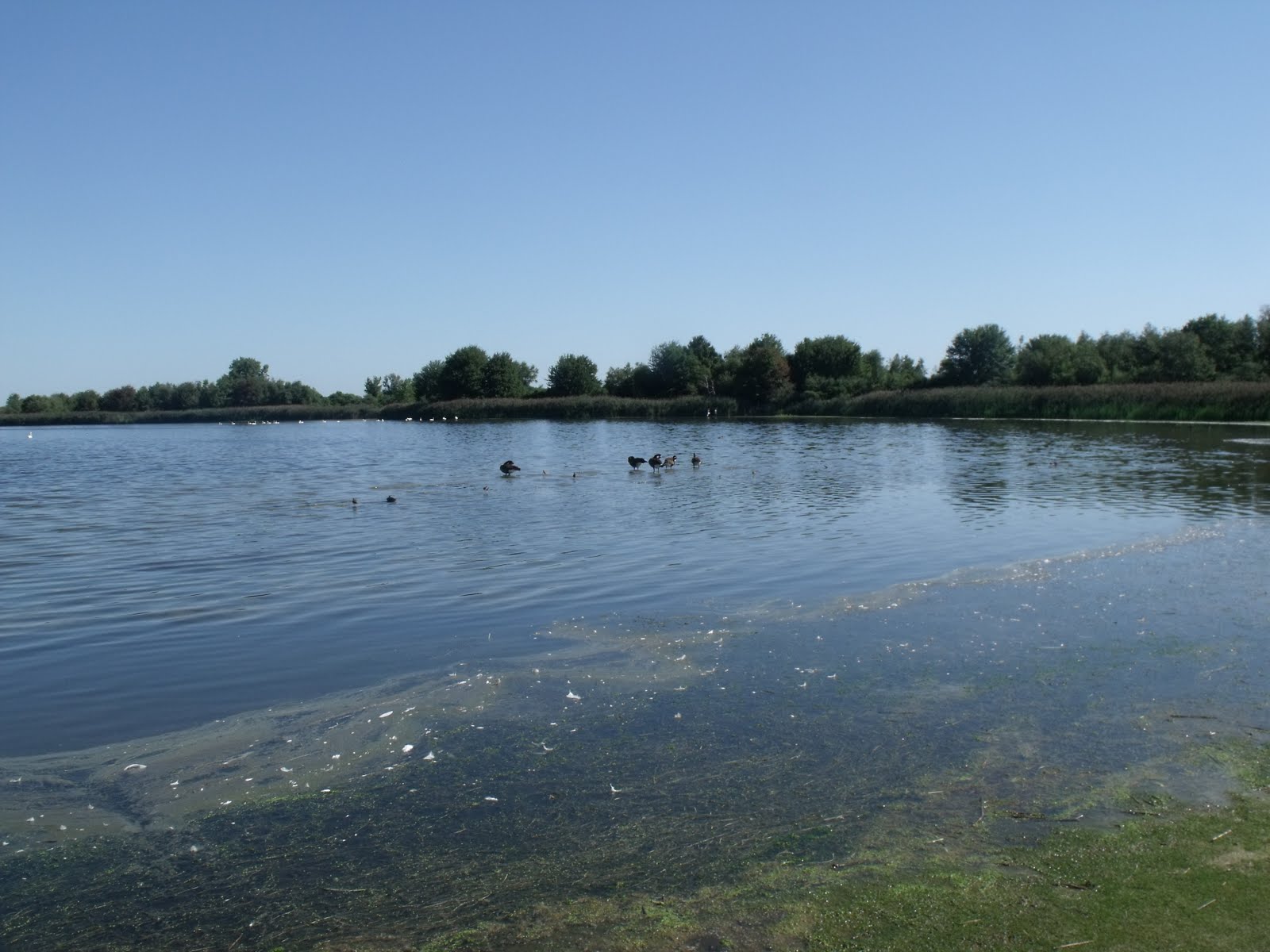
The South End (note high water level)- 

The two most common peeps- Least and Semipalmated

Least-

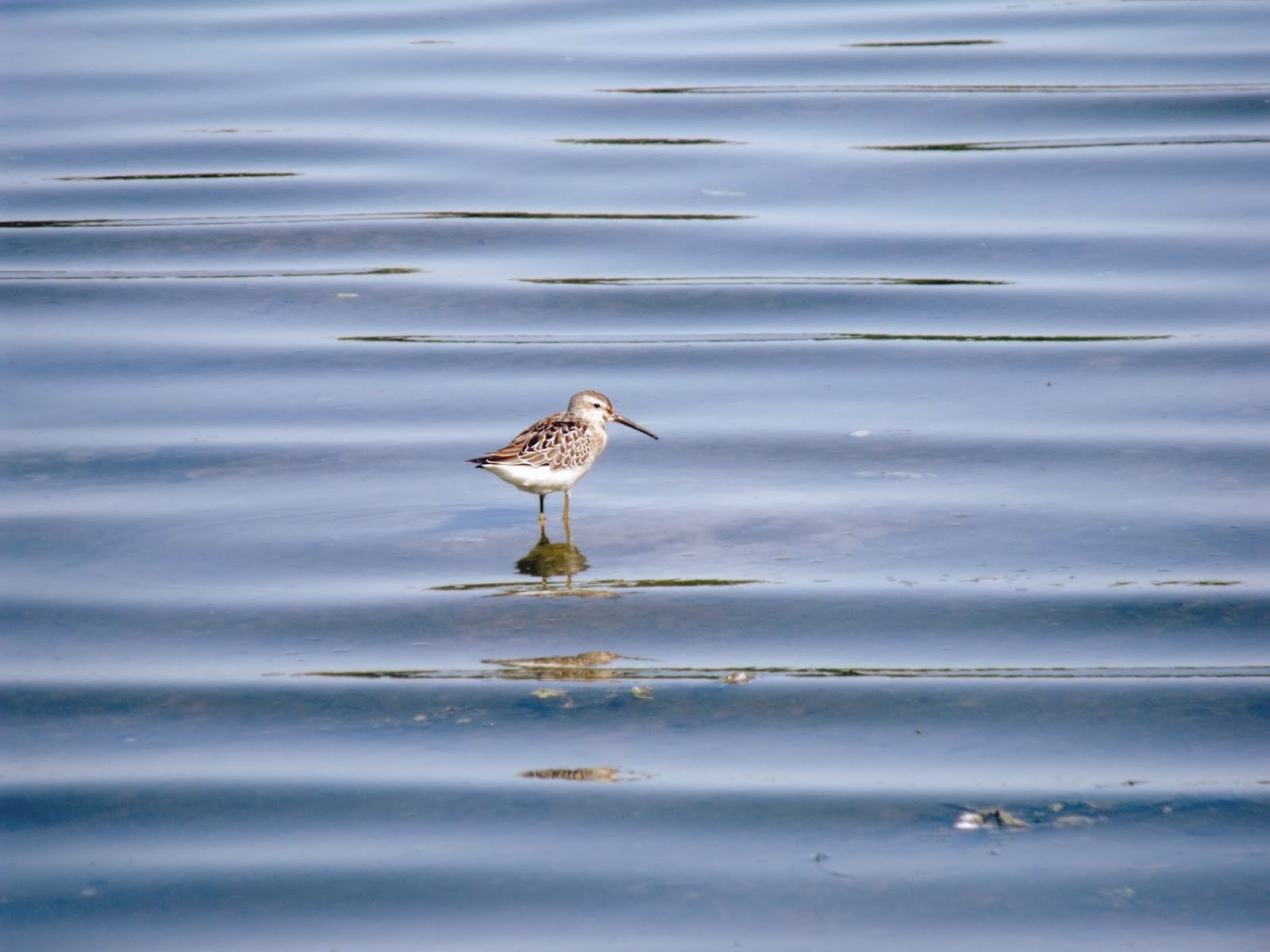
Stilt Sandpiper-


Lesser (I think) Yellowlegs-

Mute Swan-

I walked along the eastern edge of the pond to the raunt, a group of posts and pilings that apparently used to be a railway station and community, and is now a good landmark and birding spot on the pond. I found more of the same shorebirds there, plus some Northern Shovelers. 

The best bird of the trip were two brownish, long-winged shorebirds in a flock of peeps. If you've been reading this blog, you already know that they were Baird's Sandpipers, not a common bird in New York, and a lifer for me. Since I've posted lots of the photos I took of them, I just put up one more to end this post. The others are in the previous two posts. 

Baird's Sandpiper-